
February 4, 2026
Why every school needs an ERP system in 2026
From fees to attendance, an ERP transforms how schools run day-to-day operations.
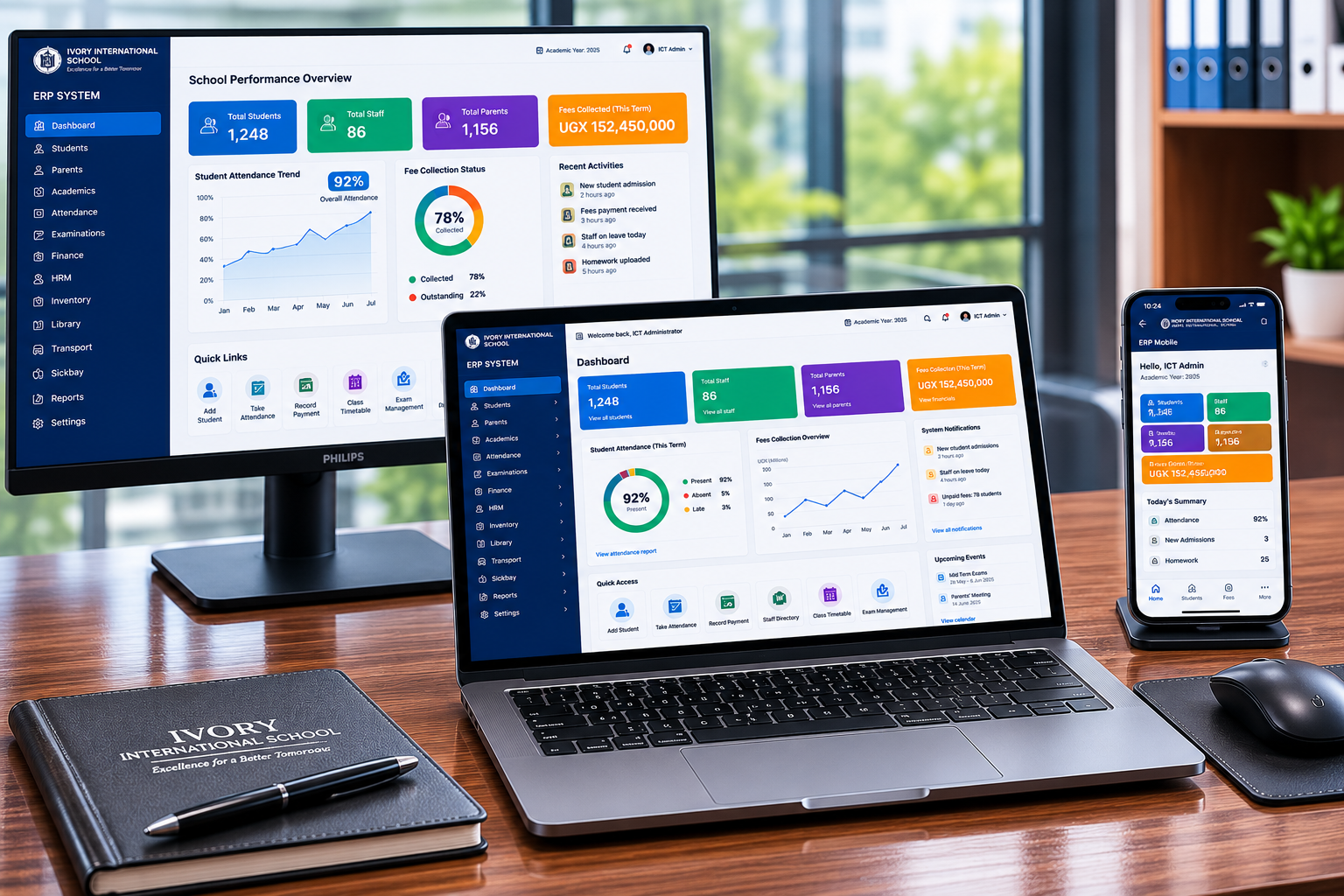
Why Every School Needs an ERP System in 2026
In today's rapidly evolving digital world, schools are expected to do much more than simply teach. Parents demand instant communication, administrators require accurate data for decision-making, teachers need efficient tools to manage their workload, and learners benefit from technology-enhanced learning. To meet these expectations, schools need a centralized and intelligent way of managing their operations. This is where an Enterprise Resource Planning (ERP) system becomes indispensable.
What Is a School ERP System?
A School ERP (Enterprise Resource Planning) system is an integrated software platform that brings together all the essential functions of a school into one centralized system. Rather than using separate applications for admissions, academics, finance, transport, communication, examinations, library, and human resource management, an ERP enables every department to work from a single, secure database.
This eliminates duplication of work, improves collaboration, and provides school leaders with real-time information for better decision-making.
The Challenges Schools Face Without an ERP
Many schools still rely on multiple disconnected systems, spreadsheets, and paper records. While this may appear manageable, it often results in:
Repeated entry of the same information into different systems.
Increased chances of human error.
Delays in preparing reports.
Difficulty tracking learner performance.
Poor communication with parents.
Time-consuming administrative processes.
Limited access to accurate data for planning and decision-making.
As schools continue to grow, these challenges become increasingly difficult to manage.
How an ERP Transforms School Management
1. Centralized Student Information
An ERP stores every learner's information in one secure location—from admission and attendance to academic performance, medical records, discipline, transport, and fee payment history. Authorized staff can access the information they need without maintaining multiple records.
2. Efficient Academic Management
Teachers can enter marks once, and the system automatically generates:
Report cards
Assessment reports
Performance analysis
Class summaries
Merit and commendation reports
Continuous assessment records
This significantly reduces teachers' administrative workload and allows them to focus more on teaching.
3. Better Financial Management
An ERP simplifies school finance by managing:
School fees
Receipts
Expenses
Payroll
Budgets
Financial reports
Parents can make payments electronically while administrators monitor financial performance in real time.
4. Improved Communication
Modern ERP systems connect schools with parents through:
SMS notifications
Email communication
Mobile applications
Parent portals
Parents receive updates about attendance, homework, examination results, school events, and fee balances instantly.
5. Data-Driven Decision Making
School leaders no longer rely on assumptions. An ERP provides dashboards and reports that help answer important questions such as:
Which subjects require improvement?
Which classes are performing best?
Which learners need academic support?
What are the current fee collection trends?
How is staff attendance affecting school operations?
These insights enable informed planning and continuous improvement.
6. Enhanced Security and Accountability
Modern ERP systems provide role-based access, ensuring that staff members only access information relevant to their responsibilities. Every transaction is recorded, making it easier to monitor activity and maintain accountability.
7. Support for Hybrid and Digital Learning
Education continues to embrace technology. A comprehensive ERP can integrate with Learning Management Systems (LMS), allowing teachers to:
Assign homework online.
Share learning materials.
Conduct assessments.
Track learner progress.
Communicate with learners and parents from anywhere.
Why 2026 Is the Right Time
The education sector is becoming increasingly data-driven. Parents expect digital services, governments continue encouraging technology integration, and school competition is stronger than ever. Institutions that invest in modern management systems are better positioned to provide efficient services while reducing operational costs.
Schools that continue relying on manual processes risk spending unnecessary time on administration instead of focusing on learner success.
Choosing the Right ERP
When selecting a School ERP, consider whether it provides:
Student Information Management
Admissions and Registration
Examination and Report Generation
Attendance Management
Fee Management
Human Resource Management
Payroll
Inventory Management
Library Management
Transport Management
Parent and Teacher Portals
Mobile Accessibility
Data Security
Automatic Backups
Customizable Reports
Integration with payment platforms and other educational services
An ERP should grow with your institution rather than limit its future expansion.
Conclusion
A School ERP is no longer a luxury—it is a strategic investment in efficiency, transparency, and quality education. By integrating academic, financial, administrative, and communication processes into one platform, schools can reduce workload, improve accuracy, enhance collaboration, and provide a better experience for teachers, learners, parents, and administrators alike.
As education continues to evolve, schools that embrace integrated digital solutions will be better equipped to meet the expectations of modern learning communities and prepare for the future with confidence.